

Quick answer
Travel itself carries no entrance fee — 0 EUR — since costs are train, bus or flight tickets that vary by operator and class. Rail is the standard choice, running from roughly 05:00 to 23:59 daily. Aim to arrive in Venice between 07:00 and 09:00, before midday congestion builds in the terminals and city centre.
Venice has no road into its historic centre. Every car, coach and taxi stops at Piazzale Roma, 30135 Venezia VE, Italy — a concrete apron at the head of the Ponte della Libertà, where wheels end and water begins. Understanding that single fact reorganises the whole journey, because knowing how to get from Rome to Venice is less about speed than about which edge of the lagoon a traveller is deposited on, and how far the luggage must then be dragged. The corridor north runs through Firenze Santa Maria Novella, Bologna Centrale and Padova, tracing the spine of the peninsula before turning east across the Veneto plain. High-speed rail dominates it, and the two operators sharing the line — Trenitalia and Italo — both terminate at Venezia Santa Lucia, the only station on the islands themselves. Everything else stops short. Marco Polo and Treviso airports sit on the mainland, requiring a bus or an Alilaguna water transfer. Long-distance coaches, and any private vehicle, halt at Piazzale Roma. The distinction matters most for day trippers, whose margins are thin: a Rome to Venice day trip lives or dies on how many minutes evaporate between platform and pavement. Daylight is the real currency. Services along the route operate across a broad daily window, from 05:00 through 23:59, and the earliest departures are the ones that make a same-day return practical rather than theoretical. The recommended arrival window of 07:00 to 09:00 exists for a concrete reason: Santa Lucia's forecourt, the Ponte degli Scalzi and the vaporetto pontoons all clog once the mainland commuter tide and the cruise arrivals overlap. Reach the Cannaregio side before nine and the walk toward Rialto is unobstructed; reach it at noon and the same walk becomes a shuffle. What to do with all this is straightforward. Fix the return leg before the outbound one, since the last useful southbound departure sets the true shape of the day. Confirm current schedules and operator information directly through https://www.trenitalia.com or by phone on +39 06 3000, as timetables shift seasonally and engineering work is common on the Bologna–Padova stretch in late summer. Note that no entrance fee applies to the journey — 0 EUR — and that ticket costs vary by operator and class alone. Readers weighing how to get from Rome to Venice against an overnight stay should measure the difference in usable hours, not in kilometres.
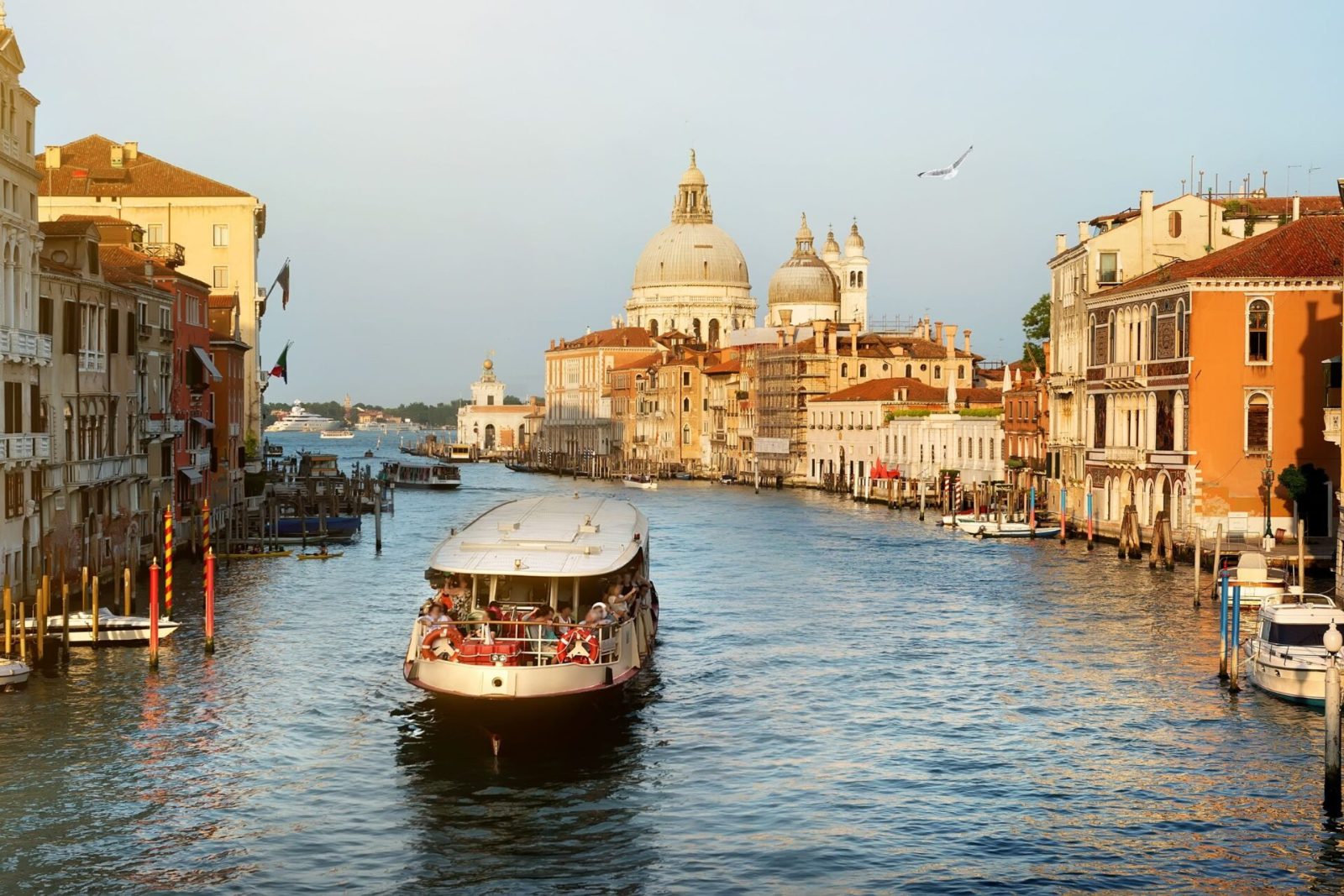
“Venice has no road into its historic centre; every car, coach and taxi stops at Piazzale Roma, where wheels end and water begins.”
How to Get From Rome to Venice by Train
The most efficient way to travel from Rome to Venice is via the high-speed rail network connecting the city centers. Direct trains depart frequently from Roma Termini and arrive at the heart of Venice.
Frecciarossa or Italo from Roma Termini to Venezia Santa Lucia
Frecciargento from Roma Termini to Venezia Santa Lucia
Vaporetto Line 1 or 2 from outside Venezia Santa Lucia to city destinations
Best Time of Day for How to Get From Rome to Venice
The best arrival window for your journey is 07:00–09:00. Arriving during this period allows you to bypass midday peak crowd congestion in Venice terminals and city centers.
Spring (April-May)
Moderate crowdsMild, 15°C to 22°C. Pleasant conditions for walking throughout the city.
Autumn (October-November)
Moderate crowdsCool, 10°C to 18°C. Fewer tourists than peak summer months.
Weekday mornings
Low to moderate—
Early arrivals provide quieter access to major squares and canals before day-tripper volumes increase.
Summer (June-August)
Heavy crowdsHot and humid, 25°C to 32°C. High volume of visitors and limited shade.
Verdict: The optimal time for a day trip is Tuesday to Thursday, arriving between 07:00 and 09:00, during the months of April or October.
Operating Hours for How to Get From Rome to Venice
Rail services between Rome and Venice operate daily to accommodate travel schedules throughout the week. Trains run consistently from early morning until late evening.
| Monday | 05:00–23:59 | |
|---|---|---|
| Tuesday | 05:00–23:59 | |
| Wednesday | 05:00–23:59 | |
| Thursday | 05:00–23:59 | |
| Friday | 05:00–23:59 | |
| Saturday | 05:00–23:59 | |
| Sunday | 05:00–23:59 |
Pricing and Costs for How to Get From Rome to Venice
There is no entrance fee required to enter the city of Venice itself. Travel costs depend entirely on the train operator, class of service, and booking timing.
A typical adult pays 0 EUR for city access, with total trip costs determined by selected rail service and ticket class.
A Sample Itinerary for How to Get From Rome to Venice
This plan suits travellers making a single long day trip from Rome, arriving in Venice within the 07:00–09:00 window and heading back the same evening. Allow roughly twelve hours door to door, with about eight of them on the ground in Venice.
Arrival at Piazzale Roma
Step off at Piazzale Roma, 30135 Venezia VE, the last point cars and coaches reach. Give yourself 15 minutes to orient and cross the Ponte della Costituzione toward Santa Lucia.
Walk the Grand Canal route
Follow the signed path through Santa Croce and San Polo toward Rialto, about 35 minutes on foot. Queues at the Rialto Bridge steps thin out if you arrive before 09:15.
Piazza San Marco
Take in the Basilica di San Marco facade, the Campanile and the Piazzetta columns. Security screening for the Basilica can add 20–30 minutes, so decide early whether to join it.
Lunch away from the square
Walk 10 minutes into Castello or toward Campo Santa Maria Formosa for a quieter bacaro. Budget an hour and refill a bottle at a public fountain.
Dorsoduro and the Accademia
Cross the Ponte dell'Accademia and walk the Zattere waterfront to the Punta della Dogana. This stretch stays walkable and takes 90 minutes at an unhurried pace.
Cannaregio and the Jewish Ghetto
Head north through Strada Nova to the Ghetto Nuovo, roughly 40 minutes of walking with stops. The route feeds back toward the station without doubling back.
Return to Piazzale Roma
Retrace the walk or take a vaporetto down the Grand Canal for the last leg. Leave 45 minutes' buffer before your departure, as bridge steps and luggage slow the final stretch.
Preparation Checklist for How to Get From Rome to Venice
A short round of preparation in the weeks before your Rome–Venice day trip keeps the logistics simple once you are moving.
-
Reserve high-speed rail seats early — Seat inventory on the Rome–Venice route tightens closer to the travel date.
-
Carry valid photo ID or passport — Italian rail operators can ask for identification matching the name on the reservation.
-
Save digital tickets offline — Signal drops in tunnels along the route, so screenshots beat live app loading.
-
Check status via Trenitalia — Confirm your service at https://www.trenitalia.com or by phone on +39 06 3000.
-
Wear cushioned, non-slip walking shoes — Venice is covered on foot over bridges, steps and worn stone paving.
-
Pack one small, hands-free bag — Narrow calli and crowded vaporetto decks leave little room for wheeled luggage.
-
Note Piazzale Roma as your marker — Piazzale Roma, 30135 Venezia VE, Italy is where road transport ends and walking begins.
-
Bring a refillable water bottle — Public fountains across the city let you top up without hunting for shops.
Check availability
Frequently asked questions about how to get from rome to venice
Everything you need to know about how to get from rome to venice